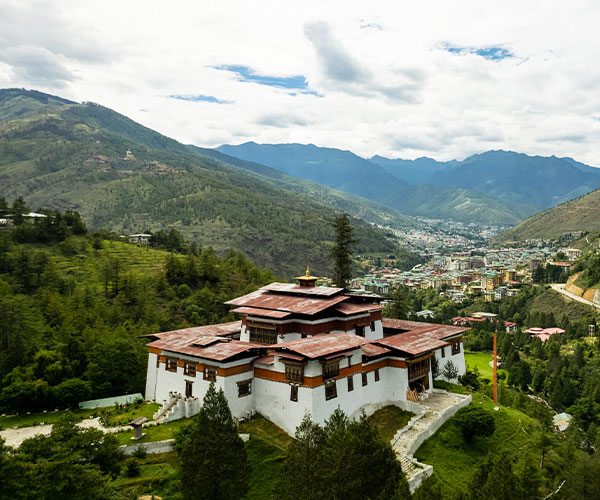
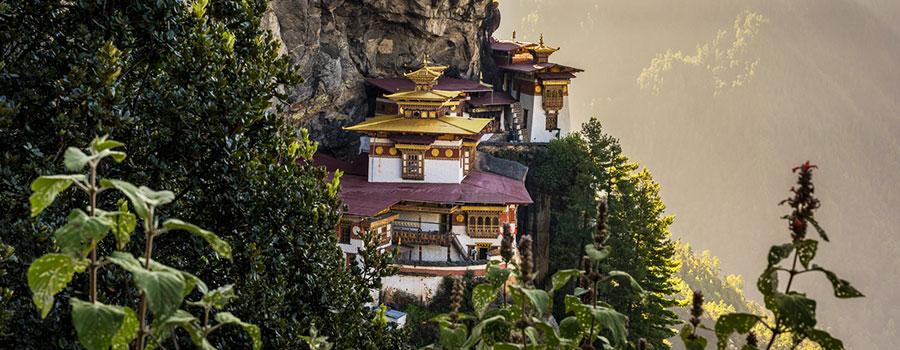
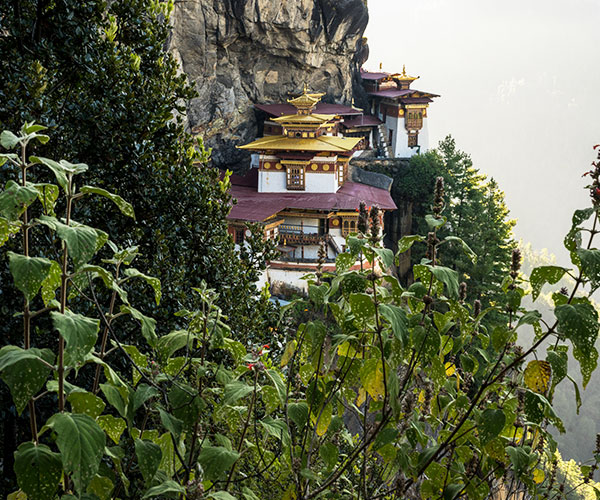
Perched dramatically on a sheer cliffside some 900 meters above the floor of the Paro Valley, Paro Taktsang — known the world over as the Tiger’s Nest Monastery — is Bhutan’s most iconic and spiritually revered landmark. According to cherished legend, Guru Rinpoche, the great master who brought Buddhism to Bhutan, flew to this very spot on the back of a tigress and meditated in a cliffside cave for three years, three months, and three days, giving the monastery its evocative name. The journey to reach it is an experience in itself: a rewarding uphill hike winds through fragrant pine forests draped with fluttering prayer flags, past a cascading waterfall, before the whitewashed temple finally reveals itself clinging impossibly to the rock face. Reaching the monastery rewards travelers not only with sweeping views across the valley but with a profound and lasting sense of serenity. For most visitors, a pilgrimage to Paro Taktsang stands as the defining spiritual highlight of their entire journey through Bhutan.
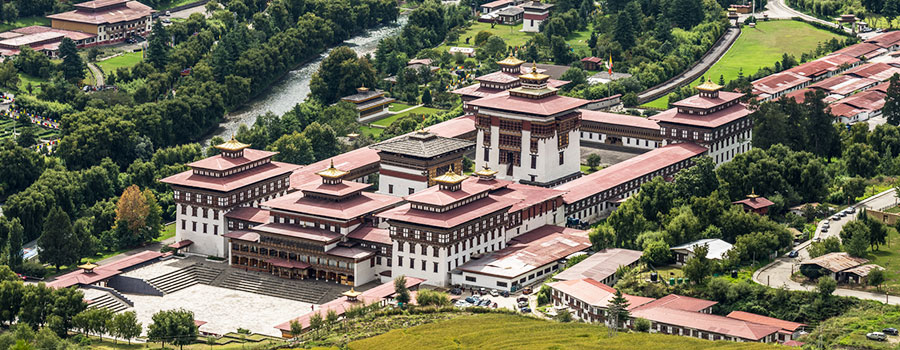
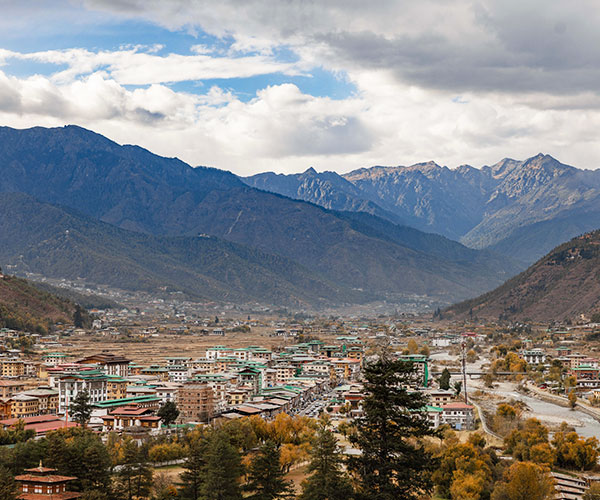
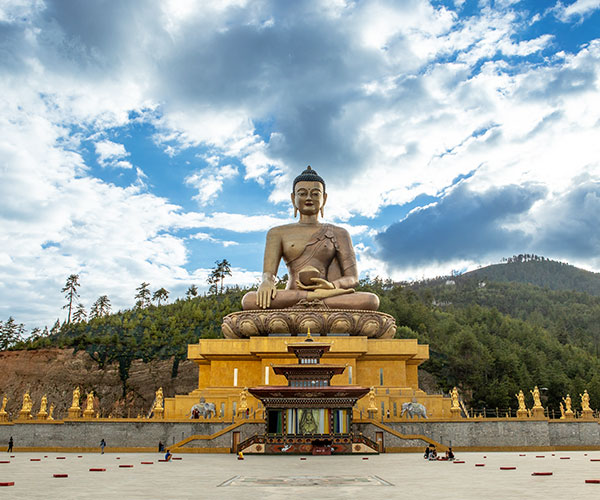
Nestled in a wooded valley and set along the banks of the Wang Chhu river, Thimphu is Bhutan’s capital and its largest city — an intriguing place where deep-rooted tradition and gentle modernity coexist in remarkable harmony. Famously, it remains one of the only capital cities in the world without a single traffic light, a small but telling reflection of the country’s distinctive approach to progress on its own terms. Thimphu offers travelers a comprehensive window into Bhutanese politics, culture, and everyday life, from the towering golden Buddha Dordenma statue that gazes serenely over the valley to the bustling weekend market where farmers gather to sell their produce. Visitors can explore traditional arts and crafts institutes where age-old skills are still taught, wander the grounds of the majestic Tashichho Dzong, and watch daily life unfold in a city that has grown without losing its soul. As the cultural and administrative heart of the kingdom, Thimphu is where any true understanding of Bhutan’s identity naturally begins.
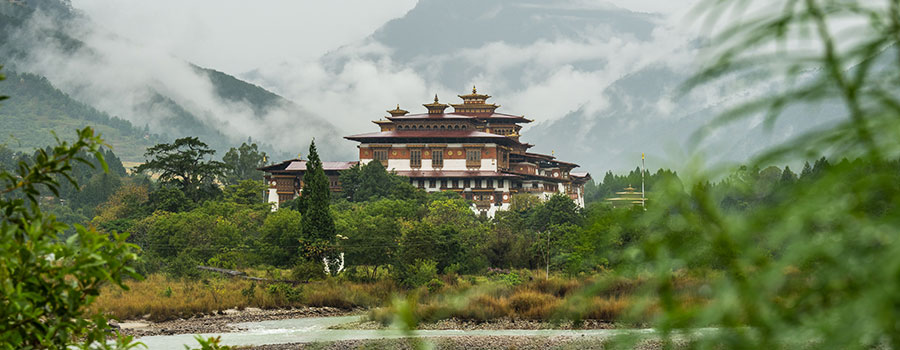
Set at the gentle confluence of the Pho Chhu and Mo Chhu — the “father” and “mother” rivers — Punakha served as Bhutan’s ancient capital until the mid-twentieth century and remains one of the country’s most beloved destinations. Blessed with a warmer climate and wonderfully fertile valleys, the region is crowned by the spectacular Punakha Dzong, widely regarded as the most beautiful fortress-monastery in all of Bhutan. Built at the river junction and framed by lilac-colored jacaranda trees in spring, the dzong is a masterpiece of traditional architecture and the site of many of the kingdom’s most important ceremonies. Beyond the dzong, Punakha rewards travelers with graceful suspension bridges, tranquil riverbank walks, and gentle hikes through terraced rice fields to hillside temples such as Chimi Lhakhang, the famed fertility temple. With its blend of natural beauty, cultural treasure, and peaceful atmosphere, Punakha is a must-see for those seeking both restful moments and quiet adventure.
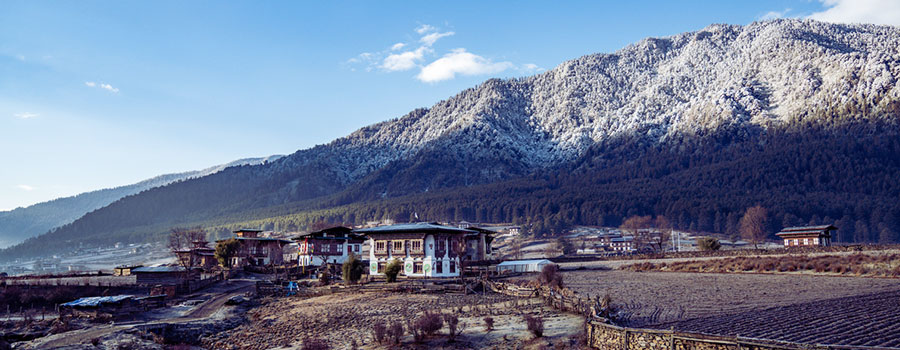
Phobjikha Valley is a breathtaking glacial valley celebrated for its sweeping open landscapes and pristine, untouched natural beauty. Unlike the narrow, steep-sided valleys found elsewhere across Bhutan, Phobjikha unfolds in wide, gentle contours that lend it an extraordinary sense of space and tranquility. The valley is perhaps best known as the treasured winter home of the rare and endangered black-necked cranes, which migrate here in their hundreds each year from the Tibetan plateau — an arrival celebrated by locals as a sacred and joyful event. Overlooking the valley stands the historic Gangtey Monastery, one of the most significant seats of Buddhism in the region, while gentle nature trails wind through forests and traditional villages, inviting unhurried exploration. With its serene ambiance, rich birdlife, and deep cultural roots, Phobjikha is an ideal destination for nature enthusiasts, birdwatchers, and anyone seeking a quiet and restorative retreat.
Often described as the spiritual heartland of Bhutan, Bumthang is a captivating collection of four beautiful valleys — Chokhor, Tang, Ura, and Chhume — each rich in history, legend, and profound religious significance. This is where Buddhism first took root in the Bhutanese heartland, and the region is home to some of the kingdom’s oldest and most sacred temples, including the revered Jambay Lhakhang, said to have been built in the seventh century, and Kurjey Lhakhang, where Guru Rinpoche left his body imprint in solid rock. Beyond its many monasteries and pilgrimage sites, Bumthang enchants visitors with gentle landscapes of rolling meadows, golden buckwheat fields, and fragrant apple orchards, along with local specialties such as buckwheat pancakes, honey, and Bhutan’s own artisanal cheeses and ales. Offering an authentic blend of living heritage, quiet spirituality, and pastoral charm, Bumthang remains one of the most rewarding and memorable regions to explore in all of Bhutan.
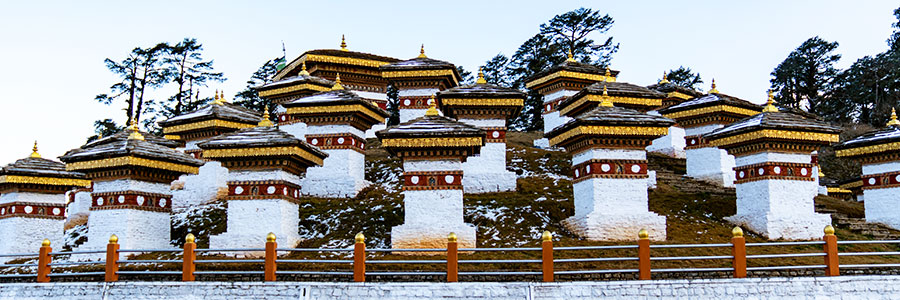
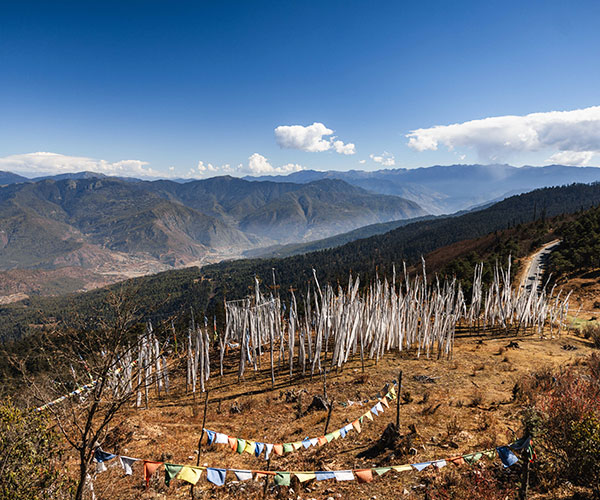
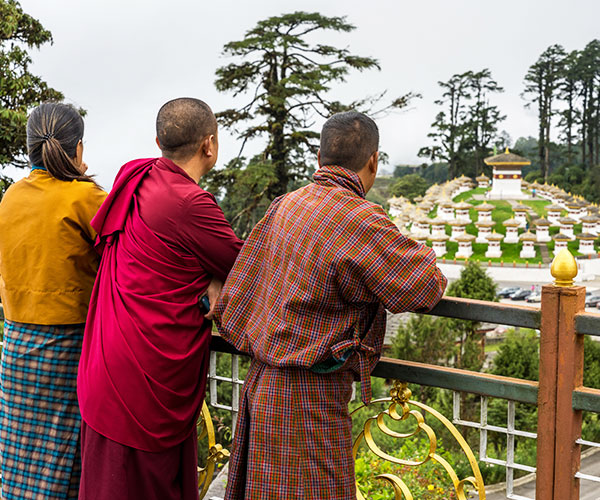
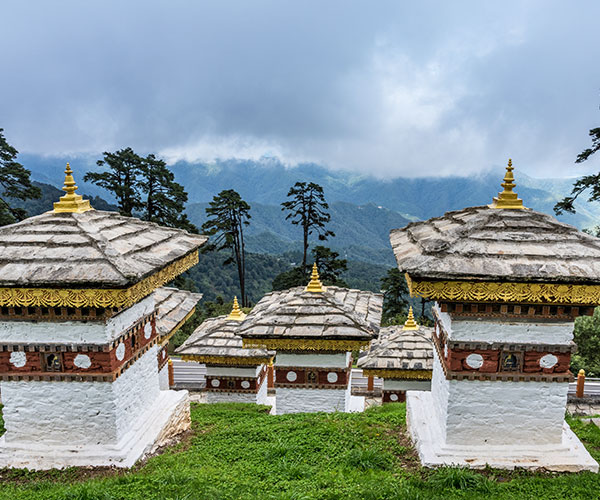
Rising to an elevation of around 3,100 meters on the winding road between Thimphu and Punakha, Dochula Pass is one of Bhutan’s most scenic and spiritually resonant mountain passes. Its most striking feature is the cluster of 108 memorial chortens known as the Druk Wangyal Chortens, built in graceful tiers upon a gentle hill and dedicated in honor of Bhutanese soldiers. On clear days — most reliably in the crisp months of winter — the pass unveils a magnificent panorama of the eastern Himalayan range, with snow-capped peaks stretching in an unbroken line across the horizon. Adorned with countless fluttering prayer flags and often wrapped in slowly drifting mountain mist, Dochula is a place of both natural grandeur and quiet reflection. It is a favorite stop for travelers, who pause here to take in the views, sip hot tea against the mountain chill, and absorb the serene, almost otherworldly atmosphere.
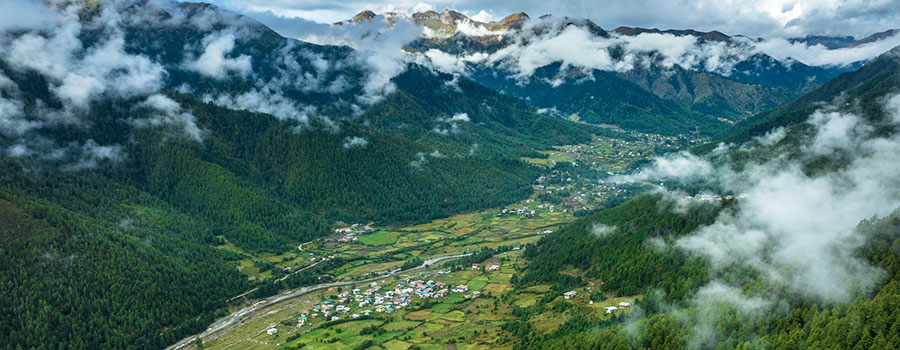
Tucked away in Bhutan’s far west and long closed to outside visitors, Haa Valley is one of the kingdom’s most isolated, unspoiled, and authentically traditional regions. Surrounded by magnificent alpine forests and dotted with small farming communities, the valley has remained largely untouched by modern tourism, offering travelers a genuine and increasingly rare glimpse into time-honored Bhutanese village life. It is home to two deeply sacred temples of great spiritual importance — Lhakhang Karpo, the “White Temple,” and Lhakhang Nagpo, the “Black Temple” — whose founding is woven into local legend. The valley is also celebrated for its annual Haa Summer Festival, a warm and vivid showcase of nomadic culture, traditional sports, local cuisine, and folk music. With its serene mountain scenery, simple rhythms of rural life, and untouched natural beauty, Haa Valley is the perfect destination for those wishing to experience Bhutan in its most pure and unhurried form.
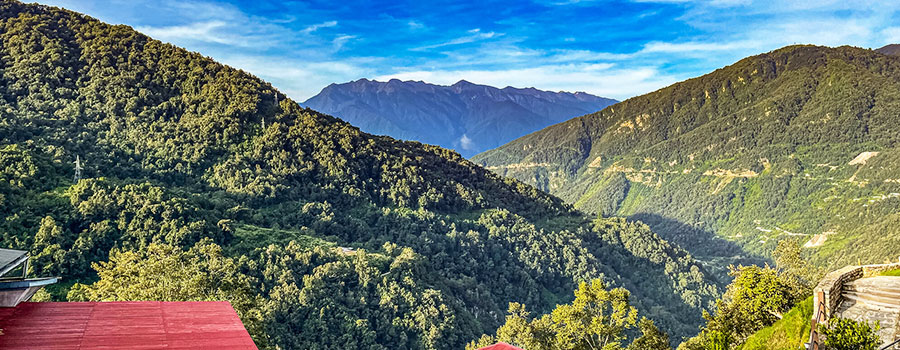
Sitting directly on the Indo-Bhutan border, Phuentsholing is a lively and colorful frontier town that serves as the principal gateway for travelers entering Bhutan by road from India. As the meeting point of two nations, it offers a fascinating and distinctive blend of Bhutanese and Indian cultures — visible in its markets, its cuisine, and the easy mingling of languages on its busy streets. The town is anchored by the beautiful Zangto Pelri Lhakhang, a temple designed to represent the celestial paradise of Guru Rinpoche, and marked by the ornate Bhutan Gate that formally welcomes visitors into the kingdom. As a bustling commercial hub and administrative center, Phuentsholing provides a gentle and gradual introduction to Bhutan’s calmer, more contemplative way of life. For many overland travelers, it is both the practical starting point of their adventure and their very first taste of the Land of the Thunder Dragon.
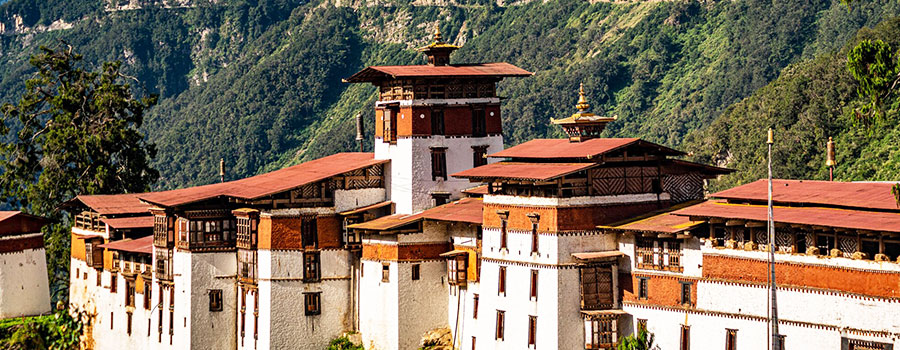
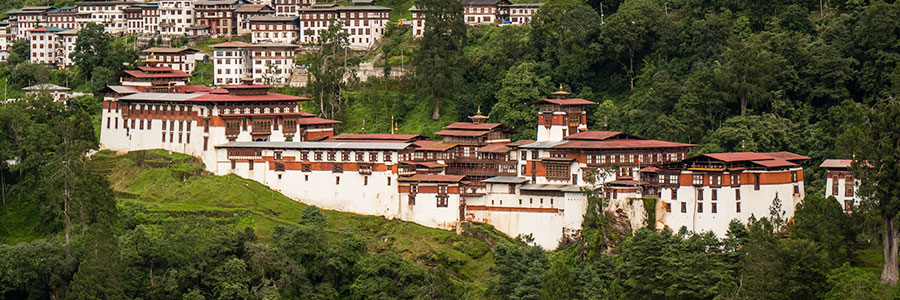
Trongsa is a historically significant town in central Bhutan that served as the ancestral home of the country's royal family. The majestic Trongsa Dzong, built over a high hill, towers above the landscape and is one of Bhutan's largest and most strategically important strongholds. Ta Dzong, located nearby, features a museum dedicated to the country's royal past. Trongsa's central location and rich history make it an essential cultural and historical destination on any trip through Bhutan.
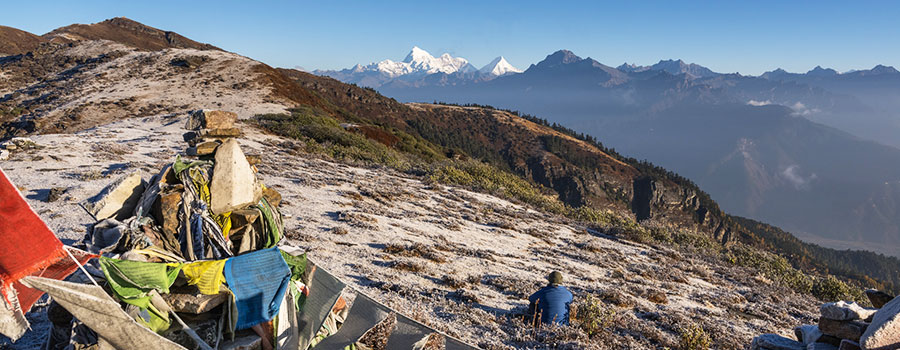
With an elevation of almost 4,000 meters, Chele La Pass is one of Bhutan's highest motorable passes. The journey to the pass, which winds through thick rhododendron trees and is decorated with vibrant prayer flags, is an adventure in and of itself. Visitors are greeted with stunning sweeping vistas of the Himalayan ranges, notably Mount Jomolhari, on clear days. For those looking for spectacular mountain vistas and a sense of peace, Chele La Pass is a must-visit because of its quiet mood and striking scenery.
 Bed Room
  Breakfast
  Transfers
  Places
  Hotels
  Bed Room Breakfast Transfers Places Hotels
  Bed Room Breakfast Transfers Places Hotels
  Bed Room Breakfast Transfers Places Hotels
  Bed Room Breakfast Transfers Places Hotels
  Bed Room Breakfast Transfers Places Hotels
  Bed Room Breakfast Transfers Places Hotels
  Bed Room Breakfast Transfers Places Hotels